Showing posts with label writing tips. Show all posts

Saturday, January 19, 2019

The Perfect Writer’s Accessory: A JORD Wood Watch


The Perfect Writer’s Accessory: A JORD Wood Watch

“I wish it need not have happened in my time," said Frodo.
"So do I," said Gandalf, "and so do all who live to see such times. But that is not for them to decide. All we have to decide is what to do with the time that is given us.”
― J.R.R. Tolkien, The Fellowship of the Ring

I have found it, my friends. The perfect accessory for writers! No, this is not a pen or a computer or even a notebook, it’s a wood watch! Least you think I’m over exaggerating, I’m going to give you three reasons why you should consider getting a Jord Wood Watch or gifting one to your favorite writer.

Three Reasons A Writer Needs A Jord Wood Watch 


1. Style

This should probably go without saying, but Jord Wood Watches are oozing with style! I know when I first visited their website (click here to check it out) I had to pick my jaw up off the floor because I thought: “Woozah these wood watches are stunning!” Now, having my very own Jord Wood Watch, I can see (and feel) the quality and style of these amazing watches.

One of the things I like best about their wood watches is the fact that they are made with “natural, and largely re-claimed materials”! Plus, they look simply amazing. The natural wood adds a lot when it comes to style, and can be paired with rustic outfits but looks equally amazing with something chic too.


2. Usefulness

This reason is not mind-blowing, but it’s true. A writer needs a watch to tell time. What? I know, crazy, right? In all seriousness, I’ve begun to realize that the more I rely on my phone, the more connected I am to everything, and the less I get accomplished. I’ve started to turn my phone to ‘do not disturb’ or leave it in another room to make sure that I’m accomplishing my goals. I’ve found it’s too tempting to look down at it and get distracted by updates and messages.

The same is true for in-person meetings. Have you been there? Sitting at a table with a friend chatting over coffee when all of the sudden you wonder what time it is? Then you look at your phone and BAM, you’re hit with all the messages you missed while you were talking. What happens next? You apologize and then start to answer them. To me, this means the conversation time is over because that connection has been broken.

A simple solution to this is a watch. No matter if you’re meeting with a friend, a date, or a potential book agent or editor, there’s no need to disrupt your conversation to find the time if you’ve got a watch on. All the better if it’s a stylish watch too, right?

3. Confidence

If you’ve followed my story, and this blog, for a while now, you know that I’m a conference photographer. One of the things I now realize I’ve been missing is a stylish watch to accompany me to the conference. You can bet that I’ll be wearing my Jord Wood Watch to the conferences I’m attending this year.

On this note, my third reason you need a Jord watch is the simple fact that a quality accessory like a unique and stylish wood watch can go a long way to adding confidence. I fully believe confidence is built inside and overflows to the outside.

If you’re wondering how simply adding a watch to your ensemble can be a confidence booster, let me explain with a personal story. My first time going to a large writers conference (we’re talking 600+ people) I was terrified. I was going to be there for five days and didn’t know anyone. Plus, it was in a city I’d never been in. Part of the confidence I gained came from planning and doing research on what would happen at the conference, but the rest came from an unexpected source. My wardrobe!

I know, it may sound silly, but it’s the truth. I didn’t spend a ton of money, but I did take myself shopping and switched my mindset to professionalism. It might be hard to believe, but when I got to the conference and put on my first outfit (one I’d picked out weeks ahead of time) I felt so confident. That confidence was built inside—in knowing that I was there for a reason and knew what I was doing—but it was fortified by how I felt about myself and how I looked. I felt good!

Something as simple as an elegant, stylish, and useful watch may just be exactly what you need to help build your confidence. Perhaps you have a conference to attend this year and maybe you’re pitching to an agent in person, consider what you wear and the accessories you include as part of your preparation.


Can I add a 4th reason? Oh good, glad you said yes!

So, my #4 reason that this watch is great for a writer is the fact that almost all Jord Wood Watches can be engraved. Words are important to a writer! So, whether this is a gift and you’re picking out the perfect thing to say, or if it’s a purchase for yourself and you want to include something on it that will encourage you, Jord can help with that.

So there you have it, my three (okay, four) reasons why I think every writer should have a Jord Wood Watch.

What do you think? Do you wear a watch? Which one of these reasons sticks out to you the most? Let me know in the comments below!

G I V E A W A Y

Don’t have a Jord Wood Watch yet? Enter to win $100 off any Jord Wood Watch by following this link: www.jordwatches.com/g/eahendryx And, just in case you weren’t sure if you wanted to enter, anyone who enters will also be emailed a consolation 10% off gift code!!!


**I’ve had the pleasure to partner with Jord Watches for this post. Jord (pronounced Yode) is based in St. Louis, where they are constantly developing new designs. Their watches are “a sophisticated mix of natural, and largely re-claimed materials, combined with quality movements and components.” Follow this link to learn more about Jord and to find your own perfect wood watch!

Thursday, August 16, 2018

Writing When the Sprinkler Goes Off by Beth K. Vogt | Guest Post


“People think authors sit outside on the lawn all day, relaxing. Writing. What they don’t realize is there are sprinklers going off.”

Wednesday, August 8, 2018

Stop thinking you aren't good enough


Stop thinking you aren't good enough...

This could have several different meanings, but the one I'm addressing specifically is to The Writer. You probably know (or are) the person I'm talking about. If so, listen up because I'm you too. (Um, yeah, just go with me on this).

Tuesday, March 13, 2018

10 Myths about Marketing Your Book by DiAnn Mills | Guest Post


Excited to have the lovely DiAnn Mills on the blog today! I've met DiAnn in person a few times at conferences and she's been a frequent guest on my blog. I love when she shares about her books here, but she's got something different for us today. This month we'll be taking a closer look at book marketing and this post is perfect for this. Join in as DiAnn shares about 10 myths we commonly hear about marketing your book. 

Tuesday, February 13, 2018


Real love drew me to write real romance. When I was a girl, the novels I read had dashing heroes who fell in love with the heroine at first sight, spouting poetic compliments.

Then I fell in love with my husband. I found him mildly annoying at first. It took us both a while to fall in love. He doesn’t give compliments, and the only poem he quotes is a limerick he wrote in junior high about dog poop (don’t ask). And I adore him.

So when I started writing, I was determined to portray real love in my stories. I wanted to portray love that would have women appreciate the men in their lives more deeply—not resent them. (tweet this)

Here are the three components of real love I like to portray in my novels:

Tuesday, November 14, 2017

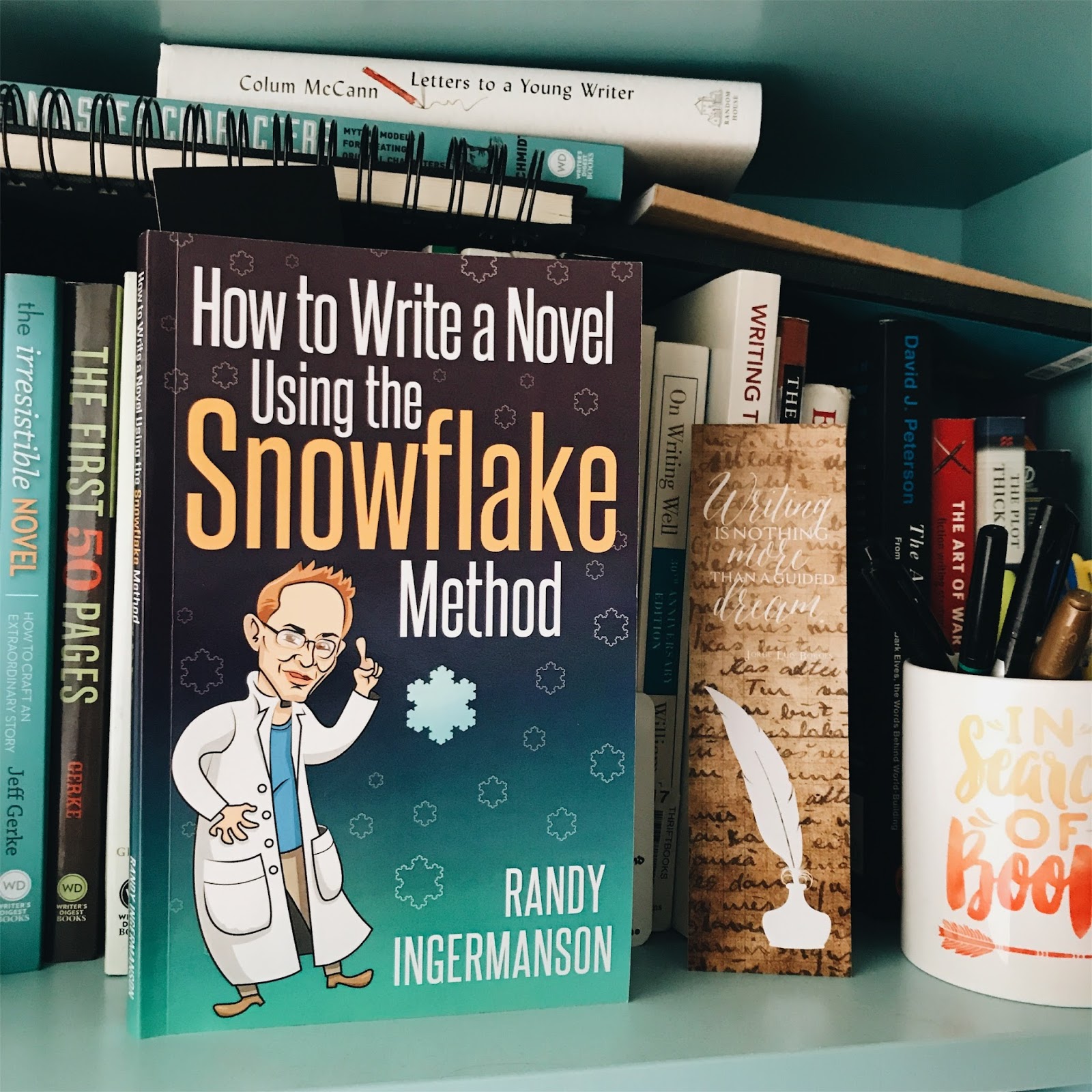
How to Write A Novel Using the Snowflake Method by Randy Ingermanson | RE:View

This book is perfect! It's such a great way to think about plotting. I started it thinking it might take me a while to get through (most craft books do) but the way this one is formatted is AWESOME. It starts out as a story that then leads you into the second half (more like later 1/3) that breaks down the process for you.

If you're like me, learning through story and example is SUPER helpful. Randy starts out with a story of someone that could easily be you or I and then has her go through his snowflake process but in a story type of way. The story itself is a little cheesy, but I think that's the point. It's to instruct by example, not to be brilliant.

Then, what I like even more, is at the end he pulls apart THAT story and shows how he used his method (The Snowflake Method) to write the story. Brilliant!

I'd highly recommend this to anyone who is struggling with their plotting process or looking to streamline how they plot. It would even be great for those looking to 'think outside the box' as far as plotting technique goes. I've found it useful in my own stories but also as a tool. I don't do everything exactly as Randy suggests, but that's kind of the point. It's tool, not a rigid way.

All writers should do themselves a favor and read this book!

My Rating: 5*
Purchase: How to Write A Novel Using the Snowflake Method

Book Description 

A Magical Key to Unlock Your Creative Wizard
@createexploreread

Are you writing a novel, but having trouble getting your first draft written? You’ve heard of “outlining,” but that sounds too rigid for you. You’ve heard of “organic writing,” but that seems a bit squishy to you.

Take a look at the wildly popular Snowflake Method—ten battle-tested steps that jump-start your creativity and help you quickly map out your story. All around the world, novelists are using the Snowflake Method right now to ignite their imaginations and get their first drafts down.

In this book, you’ll follow the story of a fictitious novelist as she learns to tap into the amazing power of the Snowflake Method. Almost magically, she finds her story growing from a simple idea into a deep and powerful novel. And she finds her novel changing her—into a stronger, more courageous person.

Zany, Over the Top, and Just Plain Fun

Wednesday, August 16, 2017

A Cheer for Series! by Valerie Comer | Guest Post


Hands up if you love reading a series!

Me, me! My hand is sky high. Although I admit I sometimes don’t read the books in quick succession, and then I get confused about which backstory character is which. It’s just that authors are so slow! They might take anywhere from two months to a year to pop out another story in that series, and I don’t have time to reread the previous books to catch back up. But neither do I want a recap of the previous story lines dumped into the first chapter.

So what’s an author to do?

Well, let’s start with what kind of a series it is. There are genres where one complete story arc often spans several books. This is often the case in speculative fiction or action-adventure. There are genres where all the books are about one m character, but they can really be read in any order. Like sleuth or police procedurals, for instance.

And then there are the kind I’m most familiar with, namely romance series. Readers expect each book to end in a happily-ever-after, or HEA, and they don’t take too kindly if the author comes back in book two and rips that couple apart and puts them back together. Do it a third time and, my guess is, your career is over.

So, if having an arc that covers several books is a no-no, then what?

Popular series can be created out of a group of siblings or friends, in which upcoming characters play the role of secondary characters in earlier books, while the previous heroes and heroines continue to cameo in later stories. Readers love to catch glimpses of earlier characters’ weddings and babies!

My first series, the Farm Fresh Romance series, was set on a farm in northern Idaho. Each new couple met, worked, and settled right there. The problem was, I’d set it up communally, so they worked together, they ate together, and they interfered with each other. All. The. Time. By book six, I had so many secondary characters I needed to send some of them away on vacations (hard on the budget, I tell ya!) just to narrow down the number of people involved in each scene.

Check out the first book, Raspberries and Vinegar, if you’re curious. It’s free on all retailers.

I got wiser when I planned a spin-off series. How about a community with a group of friends? That way there were more logical breaks. Not everyone is everyone else’s best friend, roommate, or work buddy. Toss in a community church, a community garden, a community bakery (are you sensing a theme yet?), and populate the set with families and characters of all ages, not just young singles.

What did I get? The fictional neighborhood of Bridgeview, set in Spokane, Washington, a city I’m quite familiar with. I’ve walked the streets of the area I transformed and taken hundreds of photos, smelling its air, feeling its breezes, and absorbing its vibe. I imagined the people I’d populate it with and how they knew each other, whether they’d grown up here or were transplants.

Secrets of Sunbeams, the first in the Urban Farm Fresh Romance series, launched last summer. Recently Memories of Mist, the third novel in this series, released. It’s definitely a stand-alone within the scope of the series, the only one so far about a single mom with school-aged kids whose life revolves around PTA projects, which was a total change from the single twenty-something vibe from the earlier stories. Still, the life of the community moves forward, and readers will enjoy seeing Adriana, whom they’ve already come to love, get her happily-ever-after.

Also (sneak peek!), Adriana’s relationship with her sister, Alaina, is introduced here… and Alaina is the heroine of Rooted in Love from another one of my series, Arcadia Valley Romance, and Adriana reciprocates in that story, which releases in November. So not only can characters cameo in other books of the same series, but can cross over. How much fun is that?

_____

Valerie Comer’s life on a small farm in western Canada provides the seed for stories of contemporary Christian romance. Like many of her characters, Valerie grows much of her own food and is active in the local foods movement as well as her church. She only hopes her imaginary friends enjoy their happily-ever-afters as much as she does hers, shared with her husband, adult kids, and adorable granddaughters. Valerie is a USA Today bestselling author and a two-time Word Award winner. She writes engaging characters, strong communities, and deep faith into her green clean romances.
Connect with Valerie on her website: http://valeriecomer.com/

As memories linger in the past,
so dreams stretch toward the future.

Single mom Adriana Diaz isn’t about to let the new teacher derail the PTA’s hard work in securing a greenhouse and garden area for Bridgeview Elementary School, but taking matters into her own hands turns awkward when she realizes her attraction to the teacher.

Pro-level conflict-avoider Myles Sheridan finds himself against an entire community with his reluctance to incorporate gardening into his classes. The only thing that could make his situation worse is falling in love with the ringleader, whose child is his most difficult student and whose husband had died a hero.

How can Myles compete with the man from Adriana’s memories? He’s not the material champions are made of. Or is he?

Purchase: Memories of Mist 

Tuesday, July 25, 2017

The Weakness of Fantasy by Zachary D. Totah | Guest Post


Despite the many wonders it offers, fantasy suffers from a glaring problem.

And it’s about as obvious as Sauron’s Eye, perched loftily above the genre’s landscape and leaving no corner untouched with its gaze.

The problem? Clichés.

Wizards and Elves and The Chosen One, Oh My! (aka the Problem)

Tongue-in-cheek snark aside, this cliché addiction haunts the pages of fantasy novels hither and yon as dutifully as the Army of the Dead haunted the Paths of the Dead. (Thus the need for snark.)

Fantasy shouldn’t endure such a cruel fate as the abundance of clichés placed upon its noble shoulders. Of all the genres and subgenres in existence, fantasy should shine with the most compelling creativity and uniqueness. After all, isn’t that what makes it so incredible?


The diversity and variety possible means that authors are free to explore any matter, experiment with untold worldbuilding details, and virtually create as much of the world as they please.

Why then does fantasy continue to dwell in the land of the hackneyed, a land where Chosen One characters churn off the assembly line like Saruman’s Urak-hai and stereotypes rule with an iron fist?

That’s safe storytelling. Safe, perhaps, but missing the spark and energy that makes a fantasy tale truly leap to life in the reader’s mind and heart.

I’ve come from the perspective of a Tolkien (or insert any other famous fantasy author) wannabe. This desire to imitate the best makes sense. After all, if their stories featuring x, y, and z elements enjoyed such massive success, why not do the same with mine?

Except no. Sorry ignorant young writer (talking to myself here), that’s not how it works.


Wonder and Imagination and Creativity, Oh My! (aka the Solution)

How do authors combat this problem of repeating the same themes, worlds, characters, plots?

By daring to be different.

What gave Tolkien’s work an enduring legacy? Why is Brandon Sanderson among the top fantasy writers today?

They weren’t traveling a trail well-trodden. Rather, like the Fellowship of the Ring, they blazed new paths where others had not yet gone.

Therein lies the beauty of fantasy. By nature, it’s filled with endless potential, any number of paths that each writer can make their own instead of following in the footsteps of the greats. Doing that, you’ll end up boring people because they’ve been there, done that.

A better choice is to follow their example, not retrace their exact path.

As fantasy authors, we have such storytelling freedom it’s a shame to let those unmined gems lay buried in the dirt of disuse, while we scrape about for the equivalent of stones and pebbles.

The only limit is our own hesitance to let our imaginations loose.

Want to create a world where every adult walks around on the ground while children are resigned to walking on the walls? Go for it!

How about a character that can only remember things that happen on one day of the week?

Or a magic system that makes use exclusively of green leaves?

The point is, nothing is out of bounds. If you can imagine it, you can write it. This is a lesson I learned while writing an epic fantasy series, and continues to be one I absorb more and more.

To clarify, this doesn’t mean you completely ignore the expected tropes of fantasy. There’s a reason they become clichés—people like them. Am I contradicting myself? Yes…and no.

The tricky part is striking a balance between the tried and true—aka what readers love—and the new and imaginative. If you can do that, you’ve hit the sweet spot.

*insert a semi-rave about how well Brandon Sanderson does this in all his fantasy books* Okay, I’ll stop now, otherwise I’d be praising his brilliance all day.

Let’s make fantasy as breathtaking and awe-inspiring as it deserves. A place where familiarity and originality meet in a stunning display of storytelling. To paraphrase Sam Gamgee, “Those will be the tales worth remembering.”

As a writer (and reader), what do you think is the balance between being original while including familiar elements fans enjoy?

_____
I wear many creative hats, one of which is to write speculative fiction stories. This allows me to roam through my imagination, where I have illegal amounts of fun creating worlds and characters to populate them. When I’m not busy with a thousand and one responsibilities,  I enjoy spending time with family and friends, digging into a good book, and watching movies.

I live in Colorado and don’t drink coffee. The two aren’t related.

I love connecting with other readers and writers, so don’t be shy. I keep my superpowers in check. Promise.

Website
Facebook
Twitter

Tuesday, July 11, 2017

Romance in Fantasy by Laurie Lucking | Guest Post


Emilie here: I'm so excited to feature this lovely post by Laurie Lucking to "kick off" this month's focus of Science Fiction and Fantasy! I know you'll enjoy this - I know I have.

 ***

I know this will prompt some eye rolls, but I’m going to admit it anyway. In almost any story, no matter what genre, the part that interests me the most and stays with me the longest is the romance.

Now, you’re probably thinking—this girl clearly missed the memo. Emilie’s focus this month is on fantasy and science fiction. But here’s the thing. For as much as I adore romance, I write fantasy. Why? There are hordes of voracious romance readers out there, so why would I bother with fantasy when I could just tap into that (probably more lucrative) market?

Because I prefer my romance with a touch of the supernatural. There’s something about love stories in fantasy settings that draws me in so much more than the historical or contemporary genres. I think it’s because, at least for me, the fantasy setting ups the ante and makes the story so much less predictable. Because in fantasy, anything can happen.

Take star-crossed lovers, for example. In Romeo and Juliet, Shakespeare created a tragedy surrounding a pair of lovebirds from feuding families. But how much higher could the stakes have been if an ancient prophecy predicted the breakout of a devastating war if a union ever arose between those two families? Or if the feuding households were instead comprised of devious fairies, or powerful sorcerers? You get the idea :)


The higher stakes and unpredictability of fantasy are fascinating in their own right, but when romance is involved, they also can help the reader understand love in new ways. They may call into question our assumptions, or shed light on aspects of romantic relationships we don’t usually have to think about within the parameters of our own world. For instance, Heart Song by Desiree Williams really got me thinking about how I’d react to being soul-bound to a person I barely knew. Would I embrace it, or fight it? Unblemished by Sara Ella had me pondering whether I could risk breaking someone’s heart if I knew that based on his Calling it could literally kill him. The Firethorn Crown by Lea Doué made me question whether I would be brave enough to declare my love for someone, when a positive response could break a curse, but a negative response would tighten the curse’s hold, not only for me but my entire family. The list goes on and on.


But perhaps the most profound value of incorporating romance into fantasy, or any kind of speculative fiction, is that it demonstrates the universal nature of love (tweet this). No matter where they are, no matter what their circumstances, people yearn to make connections with those around them, to feel important and valued, and to find a reason to hope for the future—something worth living, fighting, and possibly even dying for. These connections can come in many forms, including family and friendship, but are often manifested in romantic relationships. Whether in a high school algebra class, a distant planet, an epic quest, or a group of rebels fighting a corrupt government, someone will feel attracted to another person. He or she will get flustered in that person’s presence, and hope to catch their attention. Eventually it turns to daydreams about a future together, an outlook brighter than the present. Such feelings may cause the person to make poor decisions, or to lose sight of a purpose that should take higher priority. But they also can bring hope, a future to strive for, an incentive for self-sacrifice, and a manifestation of that character’s best self.

The prevalence of romance in almost any category of literature illustrates that love is a basic, but very powerful, human longing, something that spans every era and society.

Romance in real life is a beautiful, precious thing. I am so grateful that my husband and I get to live an ordinary existence, with our biggest challenges being house repairs and our kids’ misbehavior. But when I read or write, I love to have those boundaries stretch far beyond my own commonplace experience, causing me to think and feel that much more deeply. And maybe even swoon on occasion 😁

So, how do you feel about romance in speculative fiction? If you have a strong preference for or against romance in the books you read / write, why? Are there any exceptions?

Thanks for reading, and thank you so much for inviting me to visit today, Emilie!!

_____
An avid reader since birth (her parents claim she often kept them up late begging to hear just one more story), Laurie Lucking discovered her passion for writing after leaving her career as an attorney to become a stay-at-home mom. She writes young adult fantasy with a strong thread of romance, and her debut novel, Common, will release in 2018 from Love2ReadLove2Write Publishing. Laurie is the Secretary of her local ACFW chapter and a co-founder of www.landsuncharted.com, a blog for fans of clean young adult speculative fiction. A Midwestern girl through and through, she currently lives in Minnesota with her husband and two young sons. Find out more about Laurie and her writing by visiting www.laurielucking.com.

Website: www.laurielucking.com
Blog: www.landsuncharted.com
Readers’ Group: https://www.facebook.com/groups/1191276077665496/
Facebook: https://www.facebook.com/AuthorLaurieLucking/
Twitter: https://twitter.com/LaurieLucking
Instagram: https://www.instagram.com/laurielucking/
Goodreads: https://www.goodreads.com/user/show/22270968-laurie-lucking
Pinterest: https://www.pinterest.com/luckinglaurie/

Tuesday, June 20, 2017

Motivated to Write by Kathy Ide | Guest Post


When I attended my first writers’ conference, I had no idea what I was getting into! Most people think writing a book is easy … until they actually try to write for publication. It’s such a long process, filled with discouragements and distractions, setbacks and rejections. Sometimes it would be a lot easier to quit writing than to keep at it.

But if God has called you to write, you can’t quit. Writers’ write. It’s what we do. We can’t help it.

On days when I’m not feeling very motivated, I think about the long-range effects of the tasks God has called me to do. Whether I’m writing something myself, helping a client edit a manuscript, working with writers at a conference, or helping freelance editors develop their own businesses, I’m a small part of a big team of people that God put together to get what He wanted to be written into the hands of the people He knew would need to read it, at precisely the right moment.

What if Jesus’ followers hadn’t written the gospels? You know, Luke opened his book by saying that many others had already written narratives about Jesus’ life, and they were eyewitnesses. Surely Luke must have wondered whether he should bother writing yet another account of the same story. But, he said, “It seemed good to me.” And so he wrote. Luke knew he didn’t have a unique idea, something no one had ever thought of before. But if he hadn’t written his version of the story of Christ’s life, we would not have Luke 2, that beautifully written account of Jesus’ virgin birth.

The only other gospel account we have that even mentions Jesus' birth is Matthew. And he doesn't say anything about Mary and Joseph traveling to Bethlehem and finding no room for them in the inn. Nothing about a manger. Or shepherds. Or heavenly hosts. Without Luke's writing, most of our favorite Christmas traditions wouldn't even exist. And Charlie Brown’s Christmas special would not be the same!

What if the apostle Paul had decided he was too busy traveling and preaching the good news to write? What if he’d let his “thorn in the flesh,” his failing eyesight, not to mention his imprisonment, keep him from sending letters to the churches? We wouldn’t have any of his powerful epistles from which we gain so much insight into how we are to live our lives as believers.

When I’m mired in discouragement over my writing, I think back to a moment when something I read really touched my heart or changed my life. What if the author of that book or article or short story had decided she was just too busy to write? Or gotten discouraged when she first started out? What if she’d let rejection letters, or the cost of a writers’ conference, or some critical comments from an editor crush her spirit so that she turned her back on God’s calling to write? If she had, then that moment when God touched my heart through that thing I read would never have happened.

Writers have the opportunity to make an impact for eternity. If we don’t write what God has called us to write, and pursue whatever publishing avenues God leads us to pursue, we’ll be denying readers the benefit of the wisdom God has shared with us in our life journeys.

God touches hearts and changes lives through the written word. And I love being part of the behind-the-scenes work that brings about that miracle. When I get to heaven, I’m really looking forward to meeting all the people God reached through the books and articles I helped create … and all the people who were affected by those people’s lives!

_____

I have been writing for publication since 1989. I've written books, short stories, play and movie scripts, devotionals, and Sunday school curriculum. I'm the author of "Proofreading Secrets of Best-Selling Authors" (an updated and improved version of "Polishing the PUGS," which is now out of print). I have also written books on "Christian Drama Publishing" and "Typing without Pain."

I do editing and mentoring for aspiring, beginning, intermediate, and established authors. I speak at writers' conferences across the country.

I am the founder and director/coordinator of The Christian PEN: Proofreaders and Editors Network (www.TheChristianPEN.com)and the Christian Editor Connection (www.ChristianEditor.com).

Thursday, April 27, 2017

Does Description Matter in Fiction? by DiAnn Mills | Guest Post

Does Description Matter in Fiction? by DiAnn Mills via Thinking Thoughts Blog

Some writers languish over description and create lengthy narratives to enhance their novels. Their readers enjoy passages rich with prose. Their pleasure is intensified in the details—the special features, characterization, and attributes of plot and setting.

Other writers offer enough description for readers to create their own story world. These readers value being part of the adventure. Too much narrative spoils their experience. The few areas featuring details allow readers to use their imaginations, as though they are a part of the writing process.

No matter a writer’s preference of writing style, common guidelines apply to all great novels. Descriptions must reflect character, genre, plot, emotion, and setting. These nuggets are to be shown throughout the story in ways that demonstrate the writer’s voice and style.

A polished writer searches for nouns and verbs to pack a punch. They aren’t afraid to add an adjective if it enhances the story.

A devoted writer labors to reflect intimate knowledge of the characters, plot, and setting.

A diligent writer ensures every word is necessary or deleted.

An enthusiastic writer pays close attention to sensory perception, symbolism, and point of view. Each character approaches the story world with their own unique perspective.

Does Description Matter in Fiction? by DiAnn Mills via Thinking Thoughts Blog
The entire process of acquiring research for how details are handled means lots of time and hard work for the writer.

Description is organic, a harmonious weaving of words that is seamless.

Insight into the building blocks of story pave the way for description.

Characterization
A writer knows and understands her character to the best of her ability before typing the first word. A discovery time begins as the character becomes more real during the writing process. Details about the character’s personality, background, culture, emotion, education, religious beliefs, and a list of other unique traits. Look for the oddity in the character, the idiosyncrasy, the one thing defining the character from all others.


Genre
Each genre contains elements setting it apart from all the others. Those distinctions are the details to include in the story. For example, romance novels engage the feelings of the hero and the heroine in language that uses soft consonants, bantering, and deep feelings. Suspense novels uses hard consonants to evoke tension, confrontation, and harshness. Fantasy novels often contain unusual cultures and language to build on a story world. Writers study and continue to read in their genre to master techniques.

Plot
Every story has a plot. But the plot in a romance, historical, fantasy, suspense, thriller, western, mystery, etc are all different. The goal of the story may be to solve a crime, win the girl, or stop a killer from destroying the world. The method of description corresponds to the type of story.

Setting
Where a scene takes place is an area too many writers fail to see the opportunity to move a story ahead. Describe the setting as though it were an antagonist—attractive, alluring, and then have it turn on the character.

Emotion
Emotion is why a reader turns pages. It represents passion while in the midst of initiating and responding to life. Conflict in emotions is what every person endures, and it’s vital to the impact a story has for the reader.

Description does matter in fiction, not as an engine-additive but as a power-booster to the success of an unforgettable novel.

How do you approach description?


__________
DiAnn Mills is a bestselling author who believes her readers should expect an adventure. She combines unforgettable characters with unpredictable plots to create action-packed, suspense-filled novels.

Her titles have appeared on the CBA and ECPA bestseller lists; won two Christy Awards; and been finalists for the RITA, Daphne Du Maurier, Inspirational Readers’ Choice, and Carol award contests. Library Journal presented her with a Best Books 2014: Genre Fiction award in the Christian Fiction category for Firewall.

DiAnn is a founding board member of the American Christian Fiction Writers, a member of Advanced Writers and Speakers Association, Sisters in Crime, and International Thriller Writers. She is co-director of The Blue Ridge Mountain Christian Writers Conference and The Author Roadmap with social media specialist Edie Melson where she continues her passion of helping other writers be successful. She speaks to various groups and teaches writing workshops around the country.

DiAnn has been termed a coffee snob and roasts her own coffee beans. She’s an avid reader, loves to cook, and believes her grandchildren are the smartest kids in the universe. She and her husband live in sunny Houston, Texas.

DiAnn is very active online and would love to connect with readers on any of the social media platforms listed at www.diannmills.com.

Deep Extraction
by DiAnn Mills

A pacemaker should have saved oil and gas magnate Nathan Moore’s life. Instead, it provided his killer with a seemingly perfect means of execution.

A bombing at one of Nathan’s oil rigs days earlier indicates his death could be part of a bigger conspiracy, a web Special Agent Tori Templeton must untangle. But her first order of business is separating the personal from the professional―the victim’s wife, her best friend, is one of the FBI’s prime suspects.

Clearing Sally’s name may be the biggest challenge of her career, but Tori finds an unexpected ally in the newest member of the task force, recently reinstated Deputy US Marshal Cole Jeffers. As Tori and Cole dig deeper into Nathan’s personal and business affairs, they uncover more than they bargained for. And the closer they get to finding the real killer―and to each other―the more intent someone is on silencing them for good.

Purchase: Deep Extraction

Friday, April 7, 2017

Lisa Carter | Author Chat


It's that time again--coffee or tea, settle in to get to know author Lisa Carter...

Her novel, Under a Turquoise Sky, won the 2015 Carol Award for Romantic Suspense. Her latest contemporary romance is The Deputy’s Perfect Match. The bestselling author of seven romantic suspense novels and a Coast Guard series, Lisa enjoys traveling to romantic locales and researching her next exotic adventure. A native North Carolinian, she has strong opinions on barbecue and ACC basketball. She loves to hear from readers. http://www.lisacarterauthor.com
 

How did you start writing?

Like many writers, I started out as an avid reader. As a child, I made up stories to entertain myself and neighborhood kids (aka Phineas & Ferb). I also told myself stories every night to go to sleep. I thought everyone else did this, too, until I got to school and realized this might not be considered normal behavior. Now I write because I have stories inside me that need telling. And because—writing is cheap therapy.

Can you tell us a little bit about your book?

There is some truth to the idea that there is a little part of the author in each character.

Like Evy in The Deputy’s Perfect Match, I’ve loved books since before I could read. One of my great childhood memories is finally getting my own library card with my name on it when I was five years old. I still remember the first book I checked out—a fairy tale, Thumbelina. The library and books have always been a safe haven for me.

The background of this particular story came from a situation that I witnessed when I was in the 6th grade. I had a friend named Tina. She and her brother were living with their grandmother after the death of their parents. When Tina’s grandmother died, she and her brother were sent to separate foster homes. I will never forget the aching sadness and fear on Tina’s face their last day together at our school. I never saw or heard from Tina again. But I’ve always prayed that she and her brother found each other one day. And so, was born Evy’s story.

The theme of this book is about wounded hearts. Is there a balm that can soothe hurting souls? There is—and His name is Jesus. It is the love of God and the blood of Christ that makes the wounded whole.

Did you get to do any fun research for the book?
In a total geek/book-girl moment—To research this book about a librarian, one of my local librarians and her team allowed me to “play” librarian for a day. I was trained in how to issue a library card and allowed to help patrons. So much fun—at least to a geek/book kind of girl like me.
What advice would you give to aspiring authors for writing and/or publishing?

10 Habits for Highly Effective Christian Writers 
 
1) Be a person God can use to glorify His name.
Be humble
Be teachable
Be in the Word and get to know Him
Be about prayer
Be surrendered to His will in His time and in His way
2)Glue your butt in the writing chair and write every day.
3) Read and study the master writers in your genre.
4) Join ACFW and other professional writing organizations to dialogue with other published and unpublished writers.
5) Meet regularly with a local circle of likeminded writer friends for encouragement.
6) Attend the best writer conferences your budget allows—at least one conferenc a year.
7) Learn to edit yourself brutally.
8) Develop a Teflon-coated skin when the rejections start to pile up.
9) Related to #8, persist, mature and endure.
10) It’s worth repeating again— Be a person God can use to glorify His name and
that others will enjoy working with.

What is your favorite genre to read?

I love to read romantic suspense and contemporary romance—which is what I write.

What’s your favorite green food?

Guacamole

If you could travel to any location and stay there for one month where would you go?

My heart resides in a children’s home in the highlands of Guatemala. I’d go there to spend a month—but I wouldn’t get much writing done. I always spend any time I have there loving on my little girl and the other children. If I needed to be holed up somewhere to write—a cabin in North Carolina’s rugged Snowbird Mountains would be wonderful. Or the beach—after all, NC has the Outer Banks, too. So much to choose from, so little time. 😁

Care to share what you're currently reading?

I’m currently reading through Lisa Wingate novels and anticipating Becky Wade’s latest.

Connect with Lisa...

Website: http://www.lisacarterauthor.com
Blog: https://lisacarterauthor.wordpress.com/
Goodreads: https://www.goodreads.com/author/show/5821807.Lisa_Cox_Carter
Facebook: https://www.facebook.com/lisa.carter.1272
Pinterest: https://www.pinterest.com/lisacoxcarter/ 

His Librarian Sweetheart

Still nursing old heartache, deputy sheriff Charlie Pruitt vowed he'd never get close to another woman again. But that's easier said than done when librarian Evy Shaw arrives in his small coastal Virginia town with a secret—one Charlie's determined to uncover. When Charlie joins Evy's all-female book club, he gets more than he anticipated when the romantic reads stoke a real attraction to Evy. Falling for the pretty librarian wasn't part of the plan, but when the truth behind Evy's suspicious behavior comes to light, will love be enough to bind them together?

Purchase: The Deputy's Perfect Match

Thursday, April 6, 2017

Fire Up Your Description by Jessica Kate | Guest Post


Want to know a secret? In my last manuscript, trying to get me to write much in the way of description was like trying to convince me to clean my car. Not gonna happen.

I’d much rather spend my time writing some dramatic action or dialogue in my latest scene. I want to see people throwing phones or stealing kisses. Who has time for little details, like what the room looks like or what people are wearing?

A compounding factor is the fact I’m an Australian author writing for an American audience, so describing things I’ve never seen can be tricky.

But, in my latest work-in-progress, I’ve never enjoyed writing description so much. The difference? I’m writing about where I grew up as a teenager: I brought my American characters to a remote Australian dairy farm.

Choosing a unique part of your childhood - whether it’s a place, time, or subculture - can give your story an extra oomph for several reasons:
  • You understand it, and the emotions associated with it, like no one else. And if it’s from your childhood or teenage years, those emotions are probably amplified. Rural Australia, for me, means harsh beauty, working as a team with my family, and people who know how to persevere through tough circumstances. Others may see only the isolation, obesity and suicide problems, while another may revel in the sense of freedom and the untamed landscape. But you, and your unique perspective, can make your view on this place/time/subculture really come to life.
  • A unique setting is interesting. One of the many reasons why I love Deeanne Gist’s historical fiction, is because she chooses times in history that aren’t often featured in other books. In her books, I always get a fascinating story, and I learn something I never knew before. In my romance, I hope to share a part of Australian culture with an international audience, and even share country Australia with our city-dwelling citizens. Even if you didn’t grow up in an unusual place, did any family members have a unique hobby? Vacation destination? Any other quirks? Growing up, when were you most happy, and when were you most sad? Can you use that? 
  • It’s easy! Describing something you know will save you hours of research, and the occasional embarrassing inaccuracy.
So next time you’re struggling with making your setting ‘pop’, examine your own life. What setting had meaning for you? Chances are, you can translate those powerful emotions to create a unique experience for your readers.

____________
Jessica Kate is a twenty-something author who writes Christian contemporary fiction featuring sassy heroines, fun romance and real emotion. Her manuscript Hating Jeremy Walters was a finalist in the 2015 Frasier Awards, and she’s pleased to say that after much effort, it now includes details such as what the characters were wearing. She is currently working on her second book, and is still refusing to clean her car.

She loves connecting with readers and writers through her newsletter (http://eepurl.com/cIhfxP), Facebook (www.facebook.com/jessicakatewriting), Instagram (www.instagram.com/jessicakatewriting), Twitter (www.twitter.com/jessicakate05) and her blog (jessicakatewriting.com).

Tuesday, March 14, 2017

Why We're Social | Social Media & Marketing Part 1


As I mentioned at the beginning of Misty's post, we're talking about Social Media and Marketing again here on the blog. If you missed last year's posts you can see my wrap up here.

This series will be good for those just starting out in social media, those looking to improve their presence, and even those who aren't sure they want to dive in just yet. Its aim is toward authors (since that's often who I work with) but the tips and tricks provided in these posts will be helpful for anyone wanting to improve and widen their online presence. For readers, I think this series can be a fun look at "the other side". Your comments will be hugely helpful to see what actually works. What makes you pick up a book? What makes you follow an author on social media? Feel free to chime in so we can all learn!

Why We're Social

To kick things off I thought I'd start with the biggest question of them all:

WHY? 

Why are we social? Why do we spend so much time online? Why is it important to have an online presence? Is it important? I'm sure there are a million other questions we could ask, but these seem to weight in at the top.

In response, we're social for two reasons (in my opinion):

1) It's how we function best: I believe we were created to be social with a focus on family and community. We see that (most) are happier when they have a solid familial structure or community that they can rely on.
2) It's necessary in today's market: This takes on the more technical side of things, but it is nearly impossible not to be social in today's society. Or, I could put it like this: you won't get anywhere if you aren't incorporating social media into your life in some way.*

*Let me be clear here. For #2 I am strictly talking about successful promotion and visiblity as a writer/author, not success in life 😉

So what? 

This means we need to look at three things...

1) Who is our audience? 
If you've been a part of my blog before or looked through my past material you'll know I focus on this a lot but that's only natural. If you don't know your audience, you can't connect with them. Misty did a great job talking about this and why it's so important to know your audience and how to best connect with them.

I'd even go so far as to say there's a 0.5 step to this: know yourself. Wow, I realize how completely"out there" that is, but let's look at it this way. You attract the audience you want, but you first must decide who that is (is this sounding a little like the chicken and the egg to anyone else?). Know who you are, your brand, and who you wish to attract, then you can go "out there" into the social world and find them. Some will also find you, but just like a flower must attract a bee, so must an author have the right pollen, 'er books, to attract the right bee or, um, reader.

2) How will we connect with them? 
This is the next, most logical step. We've decided who our audience is because we know who we want to attract, but then the question becomes: How will we get to them? If you are hungry and want food, you go to the grocery store. Why do you go there? Becuase they have become known as places where you can buy food. So too will your readers come to you, if you show them who you are and what you offer.

This is where I think marketing and your platform/branding come into play. If you're an historical mystery author you will want your content and social media platforms to reflect that this is what you're offering. This can show itself in a wide range of ways, but you'll best reach your reader by showing them what you're offering and then following through with that.

3) What form(s) of social media will help us do this? 
This last one is more about the how than it is they why. How will we best showcase what we're offering in places and ways that will attract the 'right' type of reader. Let's go back to that historical mystery author. They aren't likely to find loyal readers among the Science Fiction community. Instead, they'll want to see where other readers of historical mystery "hang out". This is where market research comes in handy.

Some tips: Find authors who write what you do and see where they spend time. Is it on their blog, Goodreads, or Pinterest? Guest post on blogs that cater to your genre. See if there are conferences you can go to to network with other authors in your genre. Sign up for newsletters of author's in your genre and see where they are being "social". Engage with them and their readers on a genuine level and who knows, you might just make a few friends along the way.

To wrap this up, I'll put it out there again: To succeed in today's market as an author, you must be social in some capacity. Unfortunately, even if you are published by a large publishing house, they are often looking at your "already established" platform. They want to know where your readers will come from (and we're not just talking about friends and family). They want to know that, among their own marketing efforts, you will be ready and willing to do your own part.

Another side of this to consider as well is the focus of this type of marketing. The heart behind it if you will. If you approach social media as if it is only there to benefit you, you've missed the point. Those who excel at social media do so because they make a connection with their followers. They are genuine, honest, and real with them. They share their struggles as much as their successes, and they don't make their platform about "purchasing their latest novel", they make it about genuine connection.


Authors: Do you see the need for "being social"? What social media platform(s) do you like the best?

Readers: What do you like best about author's social media platforms? What turns you off from an author (in regards to social media)?

Tuesday, February 21, 2017

Creating Catchy Characters


We've had some great guest posts on the blog this month talking about character development (like this post and this post) but today I wanted to add my two cents. I am by no means an expert on what it takes to create a great character, but I have read a lot and along the way I've picked up some tips about what makes a character stick to you. That is, what makes them "catchy". I'm mainly talking about main characters here, but some of these can apply to all characters in a book. Let's take a look...

Creating Catchy Characters

Make them real  
Yes, I am taking about fictional people, but to a reader that character will be as real as the person next door if the book is well written. Can I get an amen? You don't want to let the reader down. This doesn't mean crafting your characters after that same next door neighbor, but it does mean that you've thought through a lot of things when creating the character--and not just for the sake of the plot. Your characters all have motivations (even the secondary characters) and you need to know those.

I think David Baldacci is a fabulous example of a writer who makes all of his characters real, whether it be the mailman he uses to find dead bodies to begin the story or his main character who is motivated by a tragic past.

Help them stand out
No matter if a chracter is shy and introverted or wild and raucous, they still need to stand out in a readers mind. This is a combination of all of the things mentioned (as well as the authors voice and the plot) but creating a solid character is the first step to making them "memorable".  Usually, the thing I remember the most about a character is their transformation (talked about more in the next point) but it either personally affected me or changed them so much, and so "real-ly", that it seared that character forever into my mind. This happens by creating real emotions on the page, sharing them through Deep Point of View, and getting at the heart of who they are as a person.

A good example of this to me was Eliyana from Sara Ella's novel Unblemished. She stood out in my mind not because she was so "notable" in her surroundings, but because of how I was able to experience what she was going through in her thoughts. I rooted for her because I knew what struggles she was facing mentally. 

Give them a purpose
This seems simple enough, but if a character's purpose is simply to "accompolish this goal" or "be happy" your character will fall flat. They need external and internal things they desire (their goal), the impetus to achieve those desires (their motivation), and then the issues that arise when they try to accompolish this (the conflict).

Take a character named Sally. Let's say Sally loves playing piano but she has terrible stage fright. First, we must know that she desires to become a world class pianist because her mother was one and, though her mother is now dead, Sally want's her mother's memory to live on in her achievements (goal and motivation). But, Sally has debilitating stage fright (the conflict). It's not enough to simply have another character tell her to get over her fright so she magically does. The reader must experience Sally's stage fright through her internal thoughts, see the reaction to her piano skills (let's say they are exceptional), and then see why she eventually over comes that stage fright.

A great example of this is Nym in Mary Weber's Storm Siren trilogy. Nym is powered by some pretty incredible motivations (no spoilers here) that make her end goal and the achievement of that goal a wild and thrilling ride - but also one that makes her a catchy character!

Make them flawed
Oh boy! This is imperative! Your characters must have flaws! And, as you get to know them, you'll start to see those flaws and, what's better yet, how those flaws affect the characters end goal. I would  recommend giving your character two types of flaws (or you could call them a flaw and a quirk). A larger flaw (or flaws depending) that affects their character deeply and then a smaller flaw (or quirk) that makes them stand out.

For a flaw, I think of Haegan from Accelerant by Ronie Kendig. Haegan, though a fabulous character and filled with a lot of good things, also suffers from some pride issues which greatly affect him and those around him. 

For a quirk, Riden from Daughter of the Pirate King by Tricia Levenseller immediately comes to mind because of his "quirk" of liking things neat and orderly. Such a great little quirk that made me laugh and was used well to affect the plot without making it seem contrived. 


Give them a strength
Though I am sure there are characters out there (probably in books that I've read and have forgotten) who go through the whole book without showing true strength, but personally that's not a type of book I find joy in reading or one that (I would assume) sells well. I believe the worthiest, most memorable characters, are the ones that either have or gain a strength by the end of the book. Whether that be a supernatural strength, a personal strength, or a combination of both, it doesn't matter. They have something that makes them/helps them/pushes them to accompolish their goal. In some cases this strength is realized throughout the course of the novel, or it's bestowed on them (or they already have it) in the beginning and they have to learn to rely on it, but in all cases it's what gets them to their goal.

Ok, examples are plentiful in this area but I think of Frodo getting the ring to Mordor - this strength was not only his determination but also his friend, Sam. Then there's the Beast from Beauty and the Beast who learned that his strength wasn't in anger but in love. And Katniss from The Hunger Games who's initial strength comes from loving her sister and sacrifice, and then morphs into a responsibility to use her situation to save her people (still a strength born by love and sacrifice).

Those are just a few things that make catchy characters. What are some other things that make characters stand out? Who are some of your favorite characters? Why are they your favorites?